
The wax no longer solely dominates the market for African fabrics. New materials, sometimes hybrid, are asserting themselves through collections, shaking up the established hierarchy. Designers are multiplying transcontinental collaborations, blurring the line between heritage and innovation.
Pieces that were long considered strictly ceremonial are now integrating into everyday wardrobes. Aesthetic codes are evolving under the influence of younger generations and the urban scene, redefining the stylistic landscape for 2025/2026.
Why African fashion is establishing itself as one of the major influences of 2025/2026
African fashion no longer seeks to seduce through exoticism. It is establishing itself as a true field of experimentation, led by African designers who challenge clichés. Balancing respect for roots and a taste for innovation, they reinterpret each fabric, each cut, to create a dialogue between past and present without ever sacrificing authenticity. It is impossible to overlook the richness of woven cloths from Ghana, the brilliance of Malian bazin, or the sharp cuts from Cameroon. These influences are now permeating the runways of Paris, appearing in London boutiques, and asserting themselves even on Canadian stages, weaving concrete links between continents.
Here, made in Africa is no longer just a label. It represents a demanding approach: rigorous training, attention to detail, pride in craftsmanship. Added to this is the accelerating effect of social media. On Instagram or TikTok, African designers and influencers impose their vision, multiplying bold combinations, and giving traditional fabrics a new lease on life. Geometric patterns, unexpected layering, and material mixing are becoming signatures. This dynamic allows for a brilliant dissemination of African trends and an unprecedented radiance on the international stage.
Far from frozen or folkloric images, African fashion is entering contemporary debate. It questions the relationship to history, challenges the notion of authenticity, and proposes a new place for Africa in the global narrative of clothing creation. Take a look at the publications from https://www.okamag.fr/: they reflect this movement, this ability of African designers to invent trends that transcend the continent’s borders. Exchanges are intensifying, visions are changing, and African fashion is establishing itself among the defining influences of 2025/2026.
What essential trends to spot this season?
This season, textile boldness dictates the new codes. African fabrics are showcased everywhere. The wax is emancipating itself: it is transformed into graphic coats, slit skirts, and accessories with strong structures. The kente from Ghana imposes its vibrant colors and geometric patterns on jackets, dresses, and sharply cut trousers.
Here are the materials and styles that make a difference this year:
- Rich bazin: this noble fabric from Mali, recognizable by its shine, is featured in African dresses and two-piece sets. It enhances deep shades, from royal blue to emerald green.
- Ankara: reinterpreted by a new generation of designers, it structures collections with unprecedented layering and bold assembly plays.
- Wax, bogolan, kente: designers combine them to create a trendy African fashion that plays on texture contrasts and the visual power of prints. The result is African outfits that do not go unnoticed.
The silhouette is evolving: lines are stretching, shoulders are defined, volumes are asserting themselves. Gone are the standardized garments: the African wardrobe offers a renewed vision of style. Take the example of Loza Maléombho: the Ivorian designer creates pieces that are both sculptural and deeply rooted in the history of West Africa, yet with a sharp modernity.
Currently, collections freely blend traditional fabrics and avant-garde cuts. To embrace African fashion today, nothing could be simpler: wax skirts, oversized bazin coats, kente shirts. The details, covered buttons, embroidery, and tailored collars make the difference. It is in the care of detail, the precision of combinations, that the creativity of African designers expresses itself most freely.
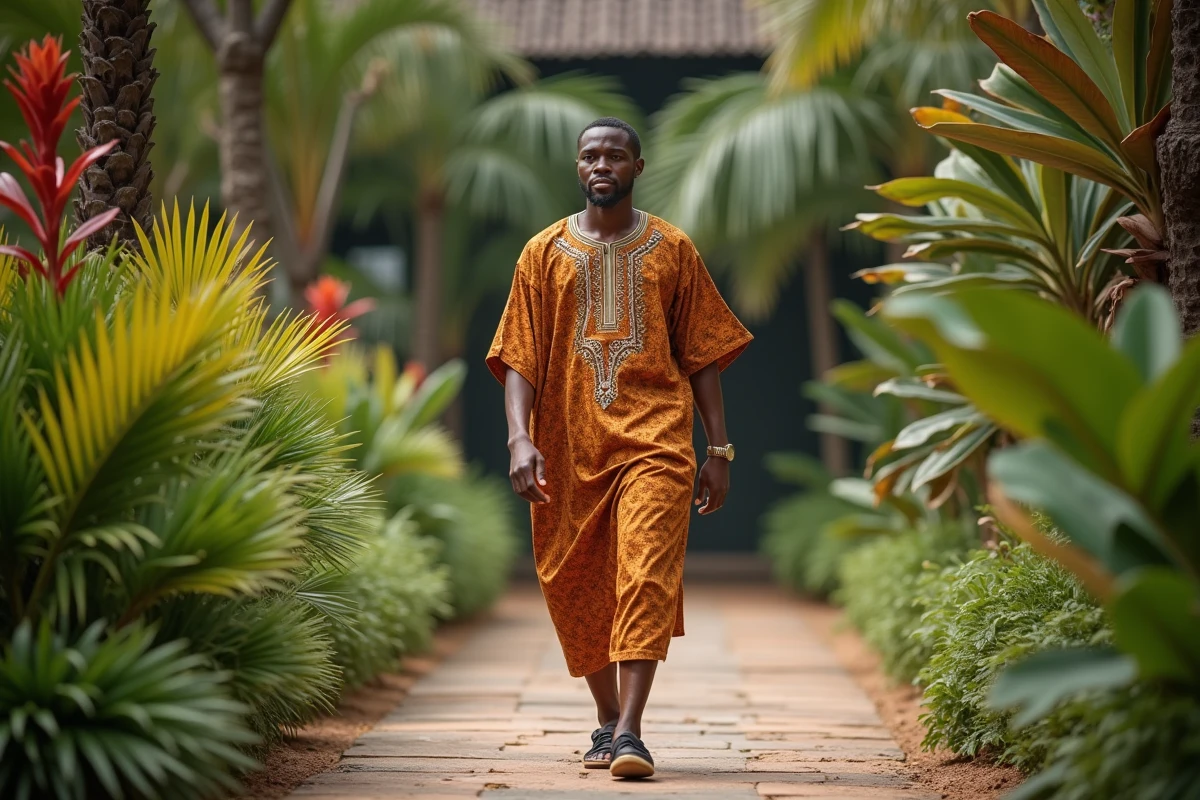
Simple ideas to adopt African style in everyday life, between tradition and modernity
Incorporating African fashion into daily life is now surprisingly simple. The African touch finds its place in every outfit, without ever falling into artifice. One example: tying a colorful pagne around the waist over plain trousers. The gesture is discreet, but the effect is remarkable. Another idea: a simple shirt, enlivened by a wax scarf or a pouch with geometric patterns inspired by kente. The essence lies in the detail, in the subtle balance between sobriety and character.
To easily integrate these inspirations, here are some concrete suggestions:
- Select African fabrics for sharply cut pieces: short jackets, straight skirts, contemporary trench coats.
- Choose the African dress in a modern version: wide sleeves, defined waist, high collar for a bold look.
- Opt for a strong accessory: bag, scarf, or sandals from the latest collections of African designers, to give an immediate signature to your style.
African fashion also expresses itself through color choices. Dare to use bold shades: midnight blue, vibrant yellow, deep green. Traditional patterns can be incorporated in touches or imposed in a total look, depending on the day’s energy. On social media, influencers multiply inspirations: layering, material plays, reimagined volumes. African designers continually push the boundaries of style, inviting everyone to invent their own clothing codes. African fashion is here, inventive, bold, and determined not to stop on such a good path.