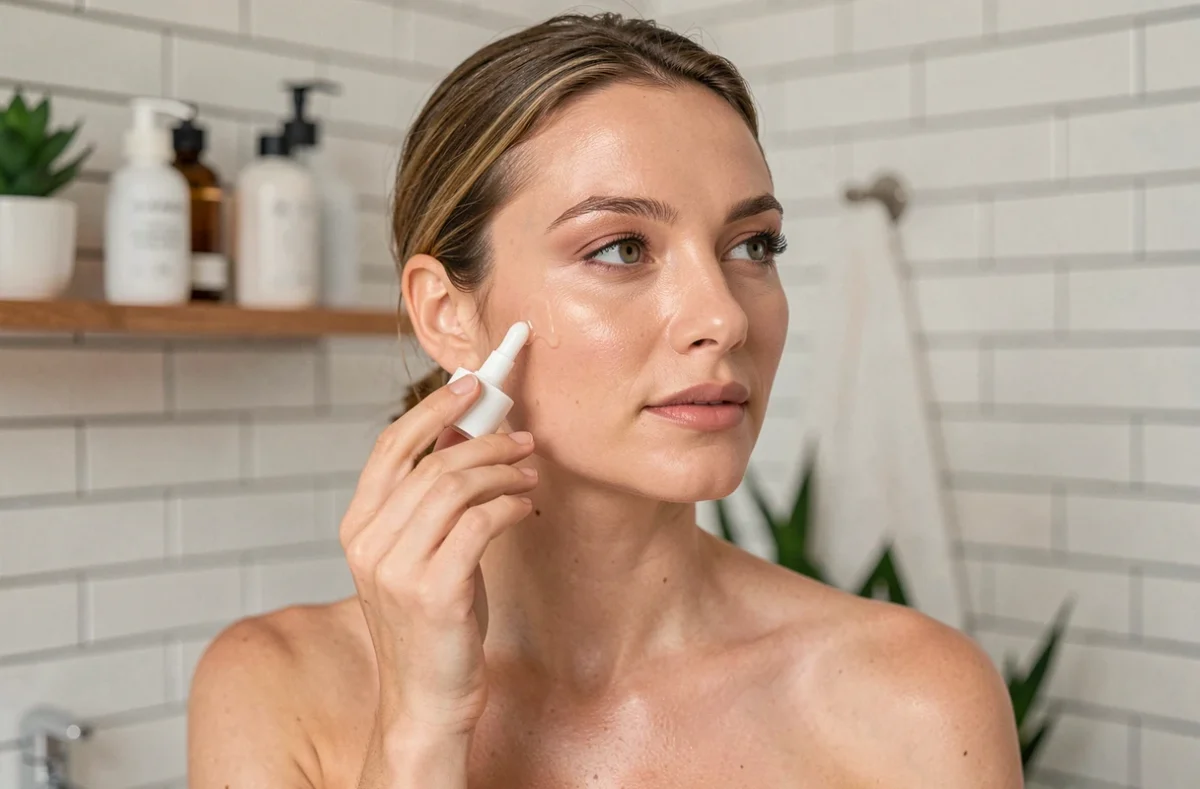
Your skin looks dull despite applying skincare every morning. Your complexion lacks radiance, and your features look tired. The best beauty tips for bringing out your natural glow every day aren’t about piling on products, but about a few targeted steps chosen to suit what your skin can tolerate and what it actually needs.
Retinol regulations in Europe: what’s changing for your glow-boosting skincare
Do you use a retinol serum to smooth skin texture and revive your complexion’s radiance? Since November 1, 2025, Regulation (EU) 2024/996 has limited the concentration of retinol and vitamin A derivatives in cosmetics. Most facial skincare products are now capped at 0.3% retinol equivalent, while body lotions are capped at 0.05%. Non-compliant products can remain on sale until May 1, 2027.
In practice, you may still find a highly concentrated serum on the shelves if it was purchased before that date. Check the INCI list and the manufacturing date. If your product exceeds these limits, it no longer complies with the new European requirements.
This limit doesn’t compromise effectiveness. A lower-dose retinol used regularly delivers better results than a highly concentrated formula applied sporadically because of irritation. Skin tolerance determines consistency, and consistency determines results. Starting with a low concentration twice a week, then gradually increasing use, remains the most reliable way to achieve a radiant complexion without redness.
To explore this kind of routine further and find ideas suited to your skin, beauty advice on Conseil Beauté covers several approaches that complement topical skincare.

Daily sun protection: the most underrated beauty step
Have you ever noticed that your complexion looks more even after a few overcast days? It’s no coincidence. UV rays speed up the appearance of dark spots and thicken the outer layer of the skin, making it less reflective and therefore less radiant.
The SPF number on your sunscreen indicates its level of protection against UVB rays, which cause sunburn. But UVA protection matters just as much for a radiant complexion. UVA rays penetrate deeper and break down collagen. Look for the circled UVA logo on the packaging.
The amount you apply makes all the difference
Most people don’t apply enough sunscreen. A thin layer of SPF 50 provides far less protection than the rating suggests. For your face, use about two finger-lengths of product. Reapply every two hours during prolonged exposure, even in the city.
Adding sunscreen to your morning routine, after moisturizer and before makeup, helps protect against both aging and loss of radiance. It’s the most worthwhile step in any beauty routine.
Tailoring your beauty routine to your skin type: the often-overlooked foundation
Applying a rich cream to oily skin or a lightweight gel to dehydrated skin is like wearing the wrong shoe size. The result is uncomfortable and counterproductive.
Identifying your skin type guides your choice of every skincare product. There are four main skin types:
- Oily skin: visible pores, shine in the T-zone (forehead, nose, chin), and a tendency toward blemishes. Choose lightweight textures and sebum-regulating ingredients such as niacinamide.
- Dry skin: frequent tightness and fine texture, but discomfort. Creams rich in fatty acids and ceramides help restore the skin barrier.
- Combination skin: oily in the T-zone and normal to dry on the cheeks. Using two different textures for different areas works better than choosing a single compromise product.
- Sensitive skin: reacts to temperature changes, with redness and stinging. Use fewer products and avoid formulas containing fragrance.
If you’re unsure, a simple test after cleansing can help you figure it out. Cleanse your skin, apply nothing for an hour, then observe. Shine, tightness, or no noticeable sensation can help guide your assessment.

Facial cleansing and exfoliation: finding the right balance
Cleansing your face morning and night is the foundation of clear skin. In the morning, a gentle cleanser is enough to remove the sebum produced overnight. In the evening, double cleansing (with an oil or balm, followed by a water-based cleanser) removes makeup, sunscreen, and accumulated pollution particles.
Exfoliation boosts radiance by removing dead skin cells that make your complexion look dull. There are two types: physical exfoliants (scrubs) and chemical exfoliants (AHAs, BHAs). Chemical exfoliants provide more even results and are less irritating, as long as you use concentrations suited to your skin.
How often to exfoliate, based on your skin’s tolerance
Once or twice a week works for most skin types. Sensitive skin benefits from exfoliating less often, for example once every ten days. Over-exfoliating weakens the skin barrier and has the opposite effect: redness, dehydration, and even duller skin.
A useful rule of thumb: if your skin feels tight or turns red after exfoliating, leave more time between sessions. The goal is smooth skin, not raw skin.
Hydration and diet: internal factors that support radiance
Moisturizer works on the surface. Internal hydration, on the other hand, affects the skin’s suppleness and radiance from within. Drinking enough water each day helps maintain cellular hydration and supports the elimination of toxins.
When it comes to diet, certain nutrients directly contribute to skin health:
- Antioxidants (berries, citrus fruits, colorful vegetables) help protect against oxidative stress, which accelerates skin aging.
- Omega-3 fatty acids (oily fish, walnuts, flaxseeds) strengthen the skin’s lipid barrier.
- Vitamin C supports collagen production and helps reduce dark spots.
Well-nourished skin responds better to topical skincare. Sleep also plays a direct role: cell renewal speeds up overnight. Chronic sleep deprivation slows this process and gives your complexion a grayish cast that even the best skincare product can’t correct.
A radiant complexion rests on three mutually reinforcing pillars: topical skincare suited to your skin, daily sun protection applied in sufficient amounts, and a diet that provides the nutrients your skin needs. None of these pillars can make up for the absence of another.