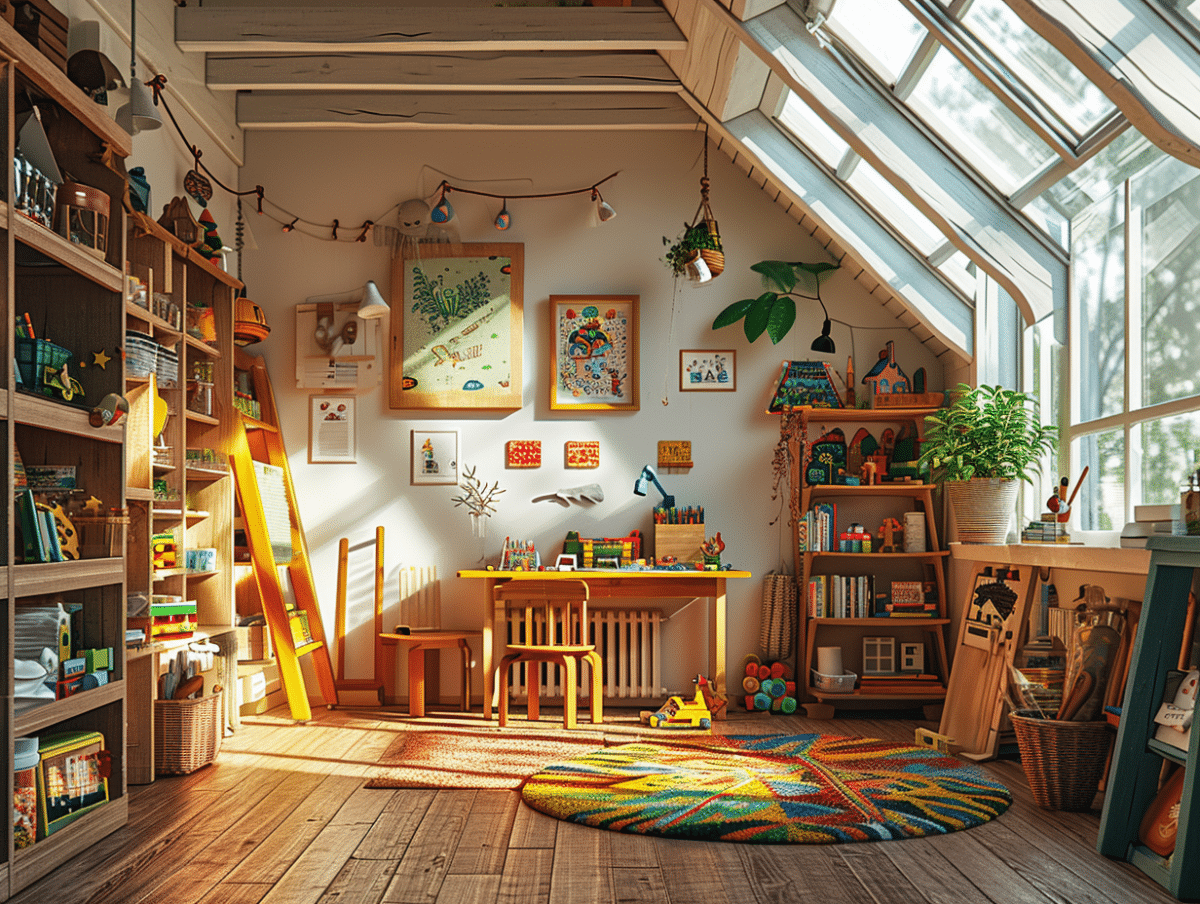
Creating a children’s playroom is an exciting project that requires careful consideration of various key elements to ensure a playful and safe environment. It involves designing a space where imagination and physical activity meet, with games suitable for different age groups. Safety must be the top priority, with non-toxic materials, rounded corners, and regularly checked equipment. It is also important to think about accessibility for children with reduced mobility, as well as creating rest areas for parents and caregivers.
Developing a children’s playroom: essential criteria and key steps
Layout by activity zones: Structuring the play area into different activity zones is fundamental for the overall development of children. This organization of space not only optimizes the use of the room but also encourages diverse exploration for children. By creating dedicated areas for art, construction play, or relaxation, you stimulate various skills in children while maintaining an orderly and functional environment.
In designing a play space, integrate specific areas conducive to sensory awakening and learning. Each space should be designed to encourage children’s natural curiosity, and for this, a variety of play areas such as a playhouse, blocks, relaxation, music and movement, tabletop games, and manipulation should be established. The choice of play materials, varied, safe, and usable in multiple ways, is crucial for a playroom that meets children’s needs.
Batiwiz plays a key role here in selecting this play equipment, offering tailored solutions for a layout that meets safety and versatility standards. The selection of wooden toys, for example, meets a dual imperative: durability and safety for children. The equipment should be usable in different ways to stimulate children’s creativity and independence.
Practical tips for managing and maintaining a safe and attractive playroom should not be overlooked. It involves establishing a regular cleaning protocol, checking the condition and compliance of toys, and implementing an intuitive storage system for children. These measures not only ensure children’s safety but also contribute to the attractiveness and longevity of the playroom.
Practical tips for managing and maintaining a safe and attractive playroom
Cleaning protocol: Maintaining cleanliness is essential for a playroom. Establish a regular cleaning protocol that includes disinfecting surfaces and washing toys. This protocol should be meticulously followed to prevent the spread of germs and ensure a healthy environment for children. Non-toxic and eco-friendly cleaning products should be prioritized to protect the health of young users.
A periodic check of the condition of toys and equipment is an essential operation for safety in the playroom. Inspect the equipment for any signs of wear or defects that may pose a risk. Immediately replace or repair damaged items to prevent accidents and injuries. Ensure that all toys meet current safety standards and are appropriate for the age groups of the children using them.
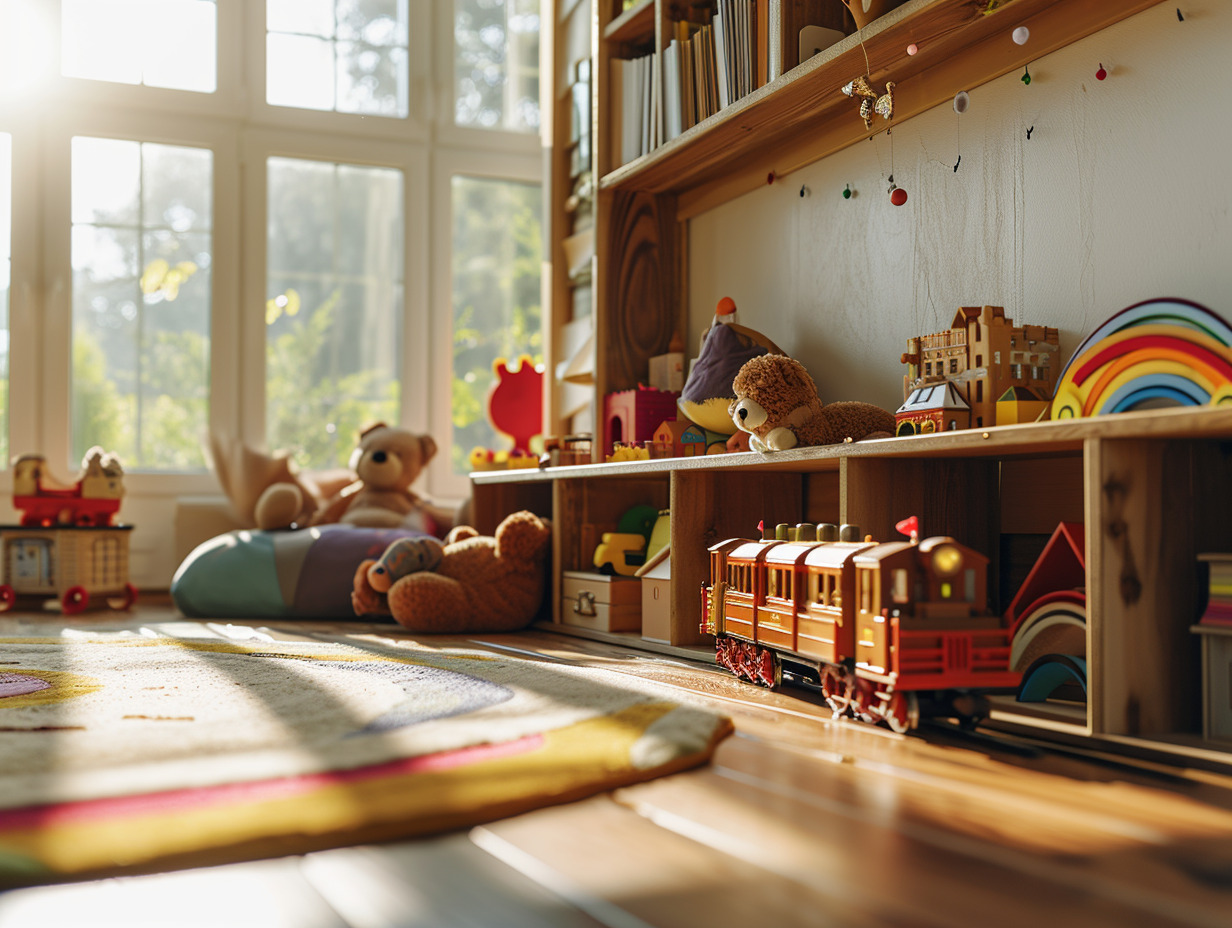
Regarding toy storage, opt for an intuitive system that encourages children to participate in tidying up. Use bins and shelves clearly labeled with pictograms or photos, allowing children to easily recognize where each toy should be stored. This method promotes children’s independence and contributes to better organization of the space, making the playroom both more attractive and functional.