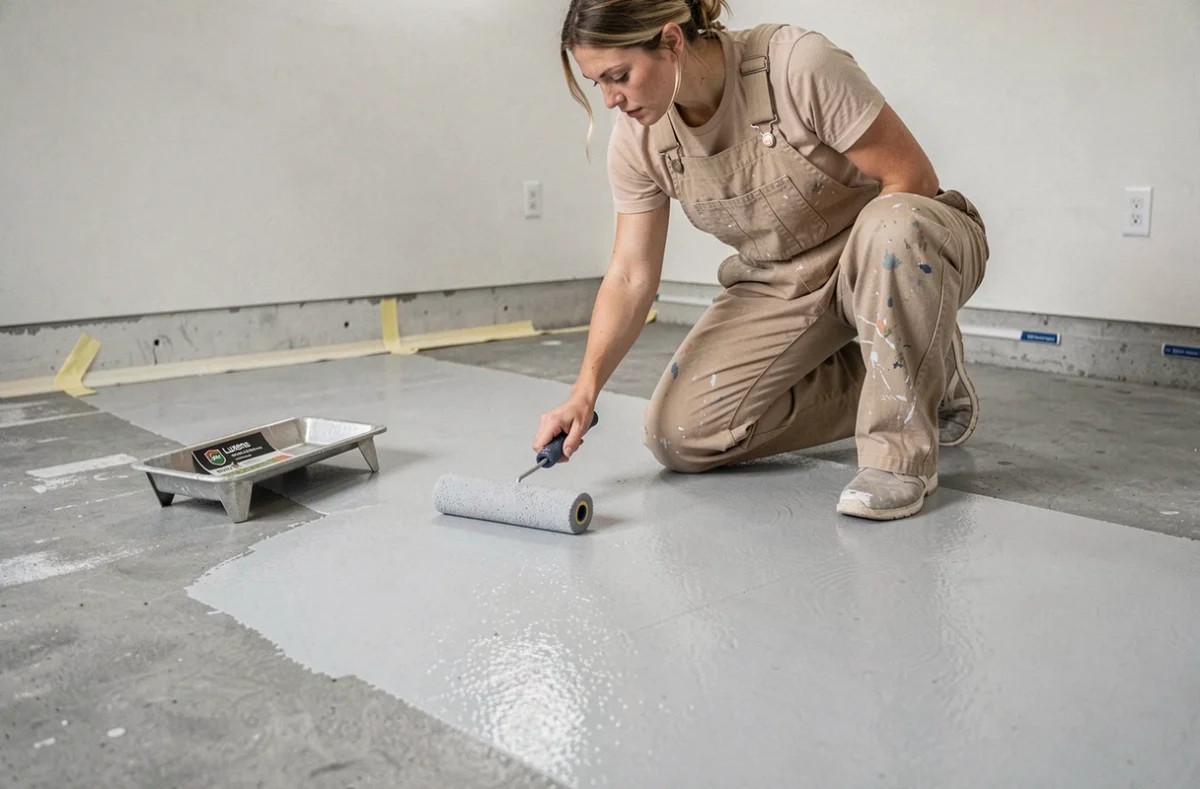
The Luxens floor paint is a private label brand marketed by Leroy Merlin. It comes in several distinct references: an “indoor floor” version formulated for parquet, tiles, and concrete, and an “intense traffic” version designed for garages, terraces, and outdoor floors. These two products do not share the same resin or performance, making generic comparisons misleading.
Luxens indoor and intense traffic floor paint: two products, two formulations
Grouping all references under the label “Luxens floor paint” is like comparing a smoothing compound and a façade plaster. The indoor floor version, water-based, targets living spaces: living room, bedroom, hallway. It can be applied on tiles, parquet, or concrete with a satin finish.
The intense traffic version has broader ambitions. The manufacturer claims compatibility with hot tire passage and protection over several years. It targets garages and terraces, with significantly higher mechanical resistance than the indoor version.
Before consulting a review of Luxens floor paint, it is essential to precisely identify the relevant reference. A positive review for the indoor version guarantees nothing for a garage, and vice versa.
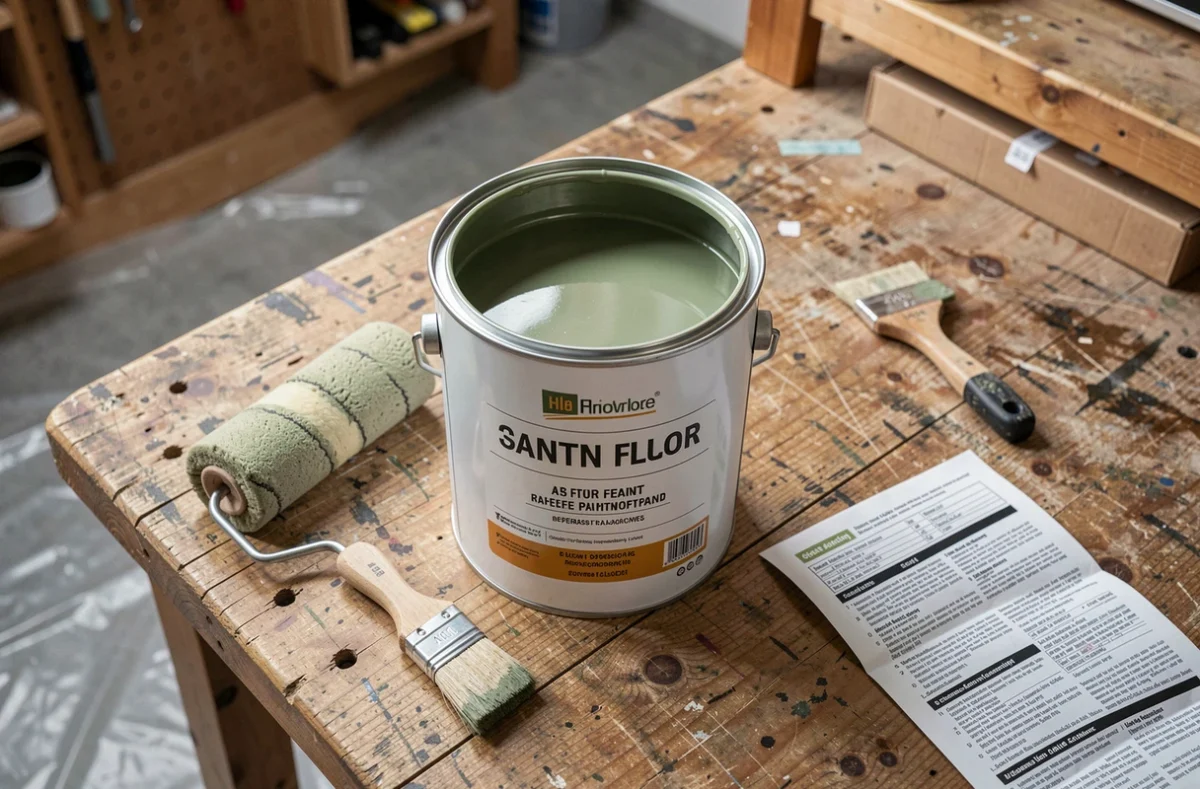
Moisture resistance: the weak point that product sheets downplay
On dry surfaces subjected to regular traffic, the Luxens floor paint performs adequately. Customer feedback converges on this point: in a hallway or living room, the mechanical durability is satisfactory.
The problem arises in humid areas. Bubbles and peeling are reported near showers and in poorly ventilated rooms. This phenomenon is not merely a lack of washability. Stagnant water or repeated condensation attacks the paint film from underneath, causing delamination that two additional coats will not resolve.
The technical data sheet mentions moisture resistance, but this refers to surface washability, not prolonged exposure to steam. For a bathroom or laundry room, a product specifically formulated with an integrated fungicidal treatment would be more suitable.
Kitchen tiles: an intermediate case
In the kitchen, exposure to humidity is sporadic. The indoor Luxens floor paint performs better there than in a bathroom, provided the room is properly ventilated. Splashes can be easily cleaned off the satin finish. However, the area around the sink remains a zone to monitor over time.
Surface preparation before application: the variable that changes everything
The intense traffic version is presented as applicable without a primer. This promise attracts impatient DIYers, but reports of peeling on terraces are directly linked to insufficient preparation.
In practical terms, “without primer” does not mean “without preparation.” The surface must be clean, dry, degreased, and free of cement laitance. On glazed tiles or a dirty terrace slab, adhesion will be poor regardless of the paint quality.
- On raw concrete: lightly sand to open the pores, vacuum the dust, check for moisture rise with a plastic test (polyethylene film placed for 48 hours)
- On tiles: degrease with alkaline detergent, rinse thoroughly, sand glazed tiles with fine grit to create mechanical adhesion
- On outdoor terraces: treat moss and lichens, let dry for several days, apply a surface preparer if the substrate is porous and uneven
Skipping this step turns the promise of “without primer” into a guaranteed failure within a few months. Surface preparation determines durability much more than the choice of paint.
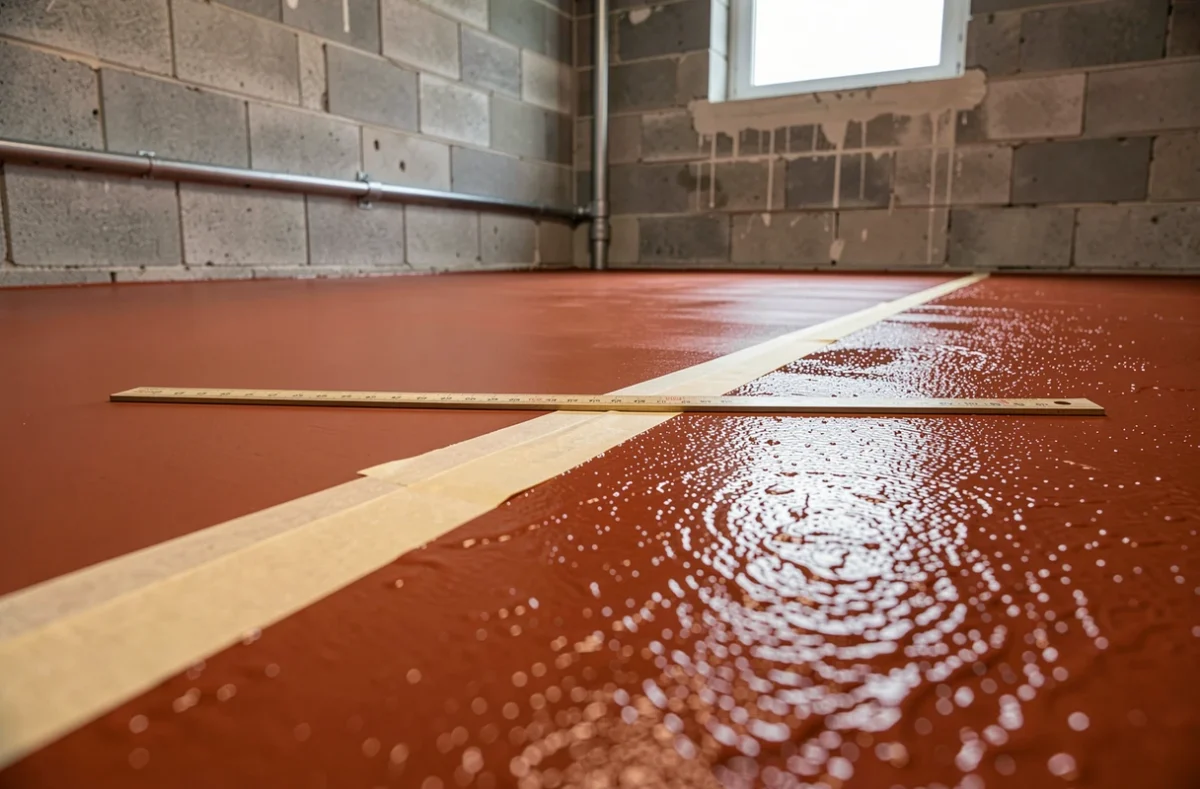
Actual durability of Luxens floor paint: what field reports say
The manufacturer claims a protection duration of several years for the intense traffic version. In practice, results vary significantly.
Some users report satisfactory performance after several years in a garage, with daily vehicle traffic. Others had to repaint after just one year. The discrepancy is almost always explained by surface preparation and application conditions (temperature, humidity level during application, adherence to drying times between coats).
Number of coats and drying time
At least two coats are recommended, with complete drying between each application. Applying the second coat too early traps residual solvents that weaken the film. In cool or humid weather, drying can exceed the indications on the pot significantly.
- Applying below 10 °C compromises polymerization and reduces film resistance
- A poorly dried floor between coats causes bubbles that burst upon passage
- Returning the floor to service too quickly (before complete polymerization) leaves permanent tire or furniture marks
Value for money of Luxens floor paint compared to competitors
The Luxens range is positioned in the entry-level to mid-range segment. Compared to floor paints from brands like Dulux or V33, the price per liter remains significantly lower for generally comparable performance under normal usage conditions.
The calculation changes for floors exposed to moisture or strong mechanical stress. Repainting a garage after a year negates the initial savings and doubles the final cost in supplies and labor time. In these cases, investing in a more technical product from the start may prove more cost-effective.
For an indoor floor in a dry room (hallway, bedroom, living room), Luxens floor paint offers a coherent compromise between controlled budget and aesthetic result. The choice of colors is limited compared to premium ranges, but the available shades (white, granite, neutral colors) cover common renovation needs.
The real limitation of this range is neither the price nor the finish: it is the tolerance for preparation errors. A high-end floor paint will forgive more imperfections in the substrate. Luxens, however, requires rigorous application to deliver the promised performance.