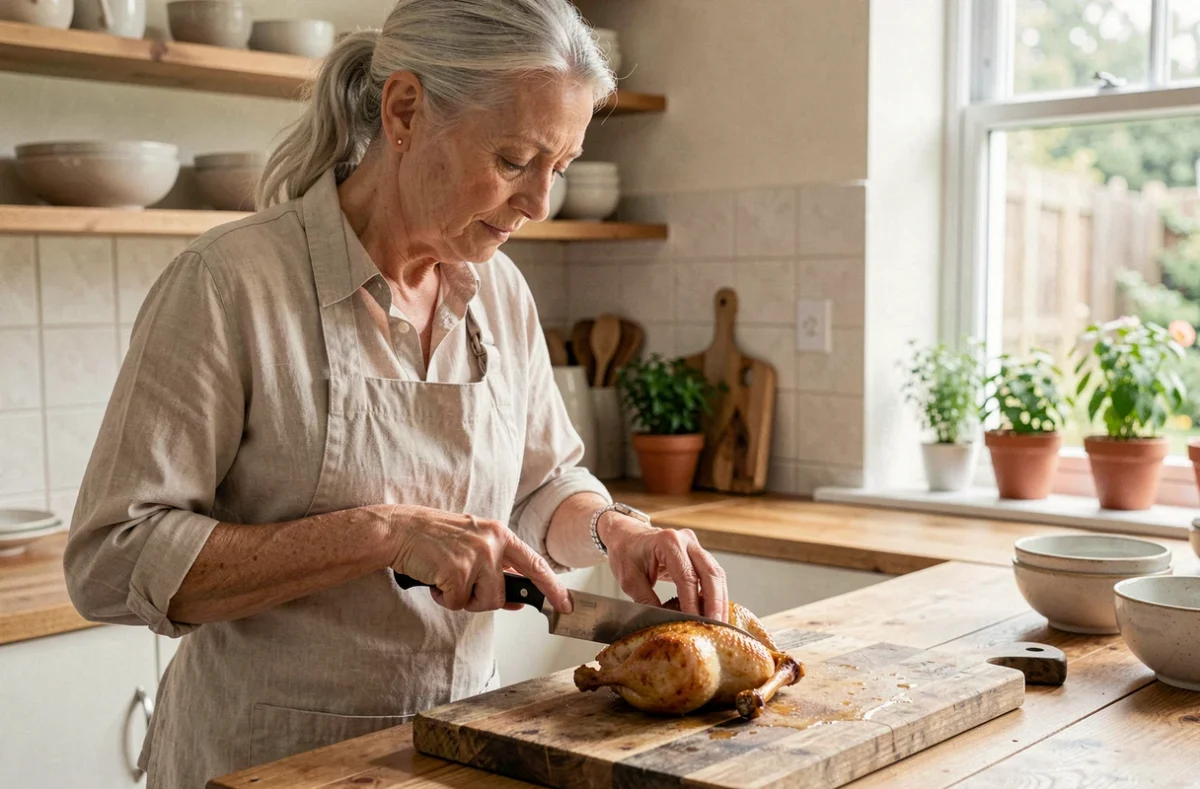
Chicken provides one of the best protein-to-fat ratios among common meats, but its real interest for seniors depends on parameters rarely addressed in mainstream content: kidney function, protein distribution throughout the day, and cooking methods suitable for chewing difficulties. Reducing the topic to “eat chicken for your muscles” ignores half the problem.
Kidney function and chicken in seniors: the protein threshold not to be exceeded
Increasing animal protein intake after age 60 is a common nutritional reflex to combat sarcopenia. Chicken, low in saturated fats, then appears as a logical choice. However, we observe that this logic encounters a frequent physiological constraint in older adults.
Glomerular filtration declines with age. In a person with chronic kidney disease or at risk, the updated KDIGO recommendations in 2024 advise against exceeding 1.3 g of protein per kilogram of body weight per day. Specifically, doubling portions of chicken breast at lunch without prior creatinine monitoring can worsen silent kidney insufficiency.
Before increasing the amount of chicken in an elderly person’s meals, a recent kidney assessment is a prerequisite, not an option. As Cap Bien-être’s information reminds us, the effects of chicken on health at an advanced age deserve a nuanced reading, far from promotional shortcuts.
Protein distribution throughout the day: why timing changes everything
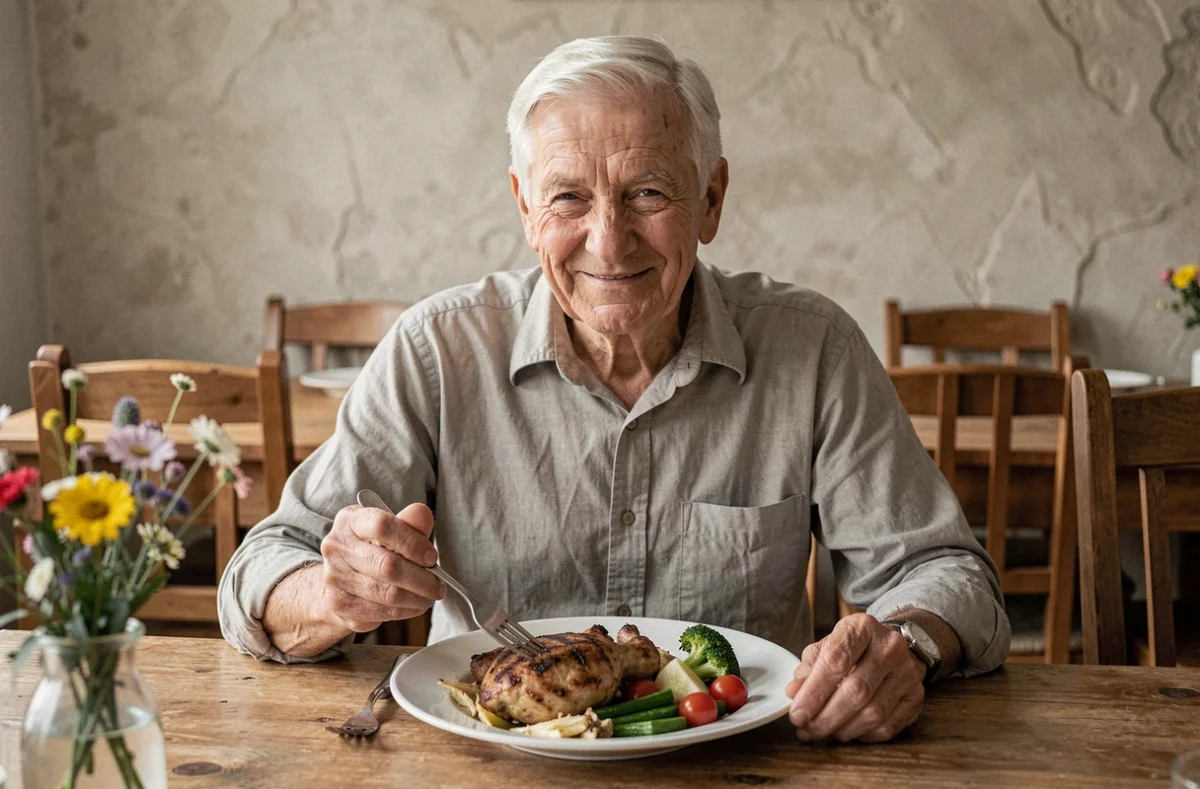
The total amount of protein ingested over 24 hours matters less than its distribution between meals. Concentrating protein intake at dinner, as many seniors do when their appetite is better in the evening, reduces the effectiveness of muscle protein synthesis.
Distributing protein over three meals improves the muscle anabolic response compared to a bulk intake. Recent practical recommendations suggest incorporating a protein source at breakfast and lunch, avoiding postponing everything to the end of the day, a time when appetite often decreases in older adults.
Concrete applications with chicken
Chicken lends itself well to this distribution due to its versatility in both cold and hot cooking. Here are some ideas to integrate it outside the classic “Sunday roast chicken” scheme:
- At breakfast, cold chicken slices in a wrap or on toast replace cold cuts while reducing saturated fats.
- At lunch, a piece of poached chicken breast accompanied by vegetables provides a complete protein intake without digestive heaviness.
- As an afternoon snack, homemade chicken broth offers protein in liquid form, easier to absorb when chewing is an issue.
Texture and cooking of chicken adapted to chewing difficulties
Mainstream content on senior nutrition almost systematically overlooks a concrete obstacle: the difficulty of chewing meat that is too dry or fibrous. Poorly fitting dentures, medication-related dry mouth, mild dysphagia: these situations affect a significant portion of people over 60.
A grilled chicken breast cooked at high temperature becomes hard to chew. Long, moist cooking transforms the texture of chicken. Stewing, cooking in parchment, and broth make the meat much more tender and easier to break down in the mouth.
Preferred cooking methods
- Chicken cooked in parchment at low temperature retains its tenderness thanks to the trapped steam, without adding fat.
- Stewing with a vegetable base (carrots, leeks, celery) softens the muscle fibers of the chicken while enriching the broth with minerals.
- Chicken broth simmered for several hours yields a liquid rich in protein, directly consumable by spoon or in soup.
- Gentle steaming at temperatures between 80 and 90 °C preserves both tenderness and nutritional value.

What chicken does not cover: nutritional limits after 60
Chicken alone is not enough to meet the specific nutritional needs of aging. It provides little to no calcium, vitamin D, and omega-3 in significant amounts. Three nutrients whose deficiencies worsen precisely after age 60, with direct consequences on bone density, immunity, and cardiovascular health.
Fatty fish (sardines, mackerel, salmon) remain the most concentrated food source of vitamin D and omega-3. Dairy products and legumes complement the picture for calcium and plant-based proteins. A diverse diet remains the only way to cover all needs, and chicken occupies only one place among others.
We recommend considering chicken as a protein pillar among three or four complementary sources throughout the week, not as the sole solution. A protein-rich chicken meal at lunch benefits from being followed by a dinner focused on fatty fish or legumes to balance the micronutrient intake that chicken does not provide.
Chicken deserves its regular place in the diet of seniors, provided that individual kidney constraints are respected, cooking is adapted to facilitate chewing, and it is never made the sole source of protein. Health after 60 is built on dietary diversity, not on a miracle food.