
Plantar fasciitis cannot be managed with just any open sandal, even those labeled “comfort.” Both Birkenstock and Billowy claim to provide arch support, but their biomechanical approaches differ on points that most consumer comparisons overlook: torsional rigidity, heel cup depth, compatibility with a foot orthotic.
Torsional rigidity and pronation control: the underestimated criterion
In our practice, we observe that patients’ first instinct is to compare cushioning. This is a mistake. The torsional rigidity of the sole conditions midfoot control much more than the foam density under the heel.
The cork-latex sole of Birkenstock resists manual twisting significantly. This behavior limits the internal tipping of the foot during the propulsion phase and reduces strain on the fascia. On two or three-strap models (Arizona, Milano), the combination of a rigid sole and adjustable strap provides sufficient support for daily urban walking.
Many Billowy models adopt a softer sole, aimed at immediate comfort. For a foot without biomechanical issues, the sensation is pleasant. However, for fasciitis related to marked overpronation, a sole that is too soft allows the arch to collapse and does not control movement. The fascia remains under tension, and pain persists. We recommend manually testing the torsion of the sole in-store: if it twists easily in your hands, it will not correct anything.
A detailed comparison featuring the podiatrist’s opinion on Billowy vs Birkenstock confirms that sole rigidity and heel support are among the most discriminating criteria for this type of pathology.
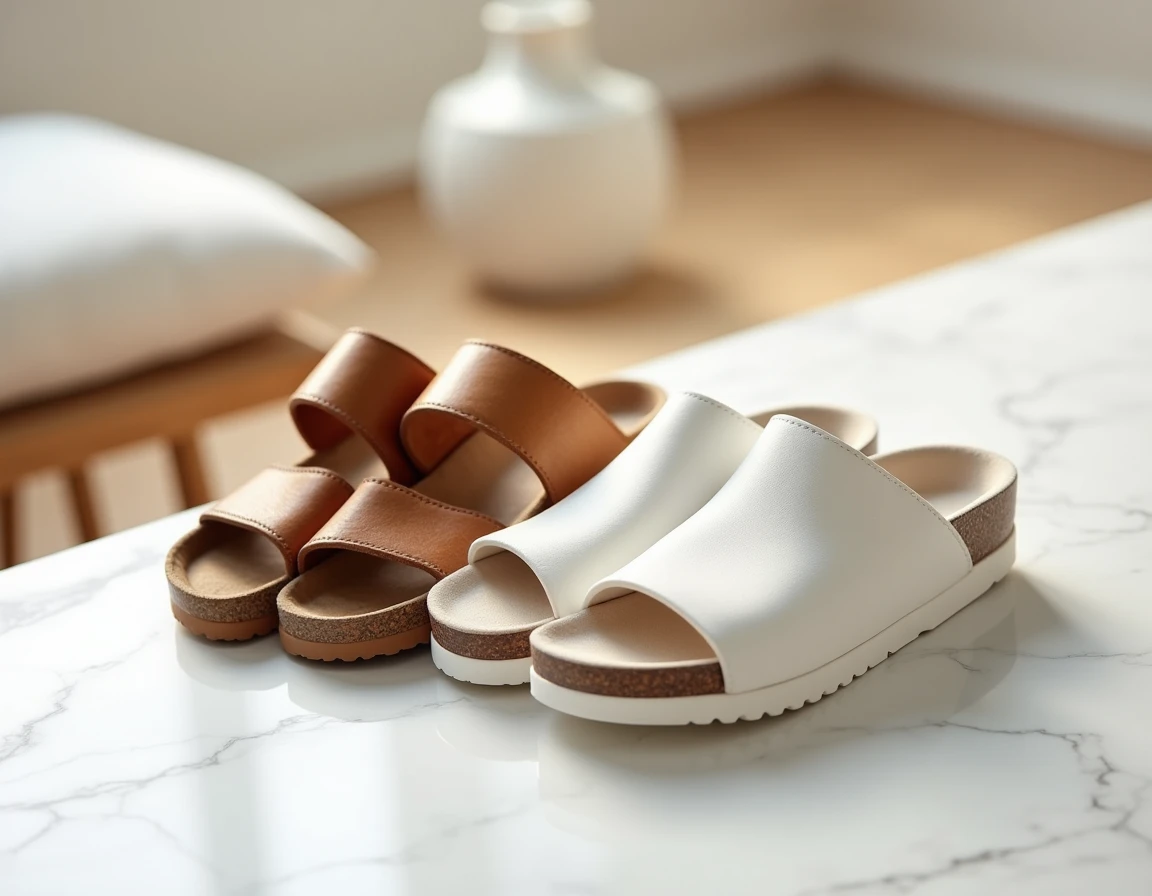
Heel cup and rear support: the common limitation of both brands
The French Union for Foot Health (UFSP) reminds us of a point that product sheets do not mention: the absence of a rear counter is a major limitation of open sandals for plantar fasciitis. Both Birkenstock and Billowy predominantly offer open-back models.
Without a closed heel contour or deep heel cup, the calcaneus remains free. The resulting micro-lateral movements increase strain on the plantar fascia with each step. Arch support, no matter how well sculpted, loses some of its effectiveness if the heel constantly slips.
How to compensate for this structural defect
- Favor models with an adjustable back strap (Birkenstock Milano, for example), which stabilize the calcaneus without turning the sandal into a closed shoe
- Check that the heel cup is sufficiently deep to envelop the heel for at least one centimeter, not just flattened with a slight edge
- Consider a model that can accommodate a custom foot orthotic, which requires sufficient internal volume and a removable insole
On this last point, most Birkenstocks accept an orthopedic insole provided the original insole is removed. At Billowy, the glued construction of some models makes this operation difficult, if not impossible.
Plantar fasciitis and overweight: a case where sandals are not enough
We regularly observe that overweight patients derive less benefit from an open sandal, regardless of the brand. The additional weight proportionally increases the tensile forces on the plantar fascia. In this context, podiatrists specializing in biomechanics recommend turning to closed shoes with a slightly elevated heel and cushioning sole, rather than sandals.
Neither Birkenstock nor Billowy communicate about this limitation. The sandal remains a supplement for relaxation moments or short wear. During acute inflammatory phases, treatment relies on foot orthotics in a closed shoe, targeted stretching of the fascia and gastrocnemius, and sometimes a shockwave protocol.
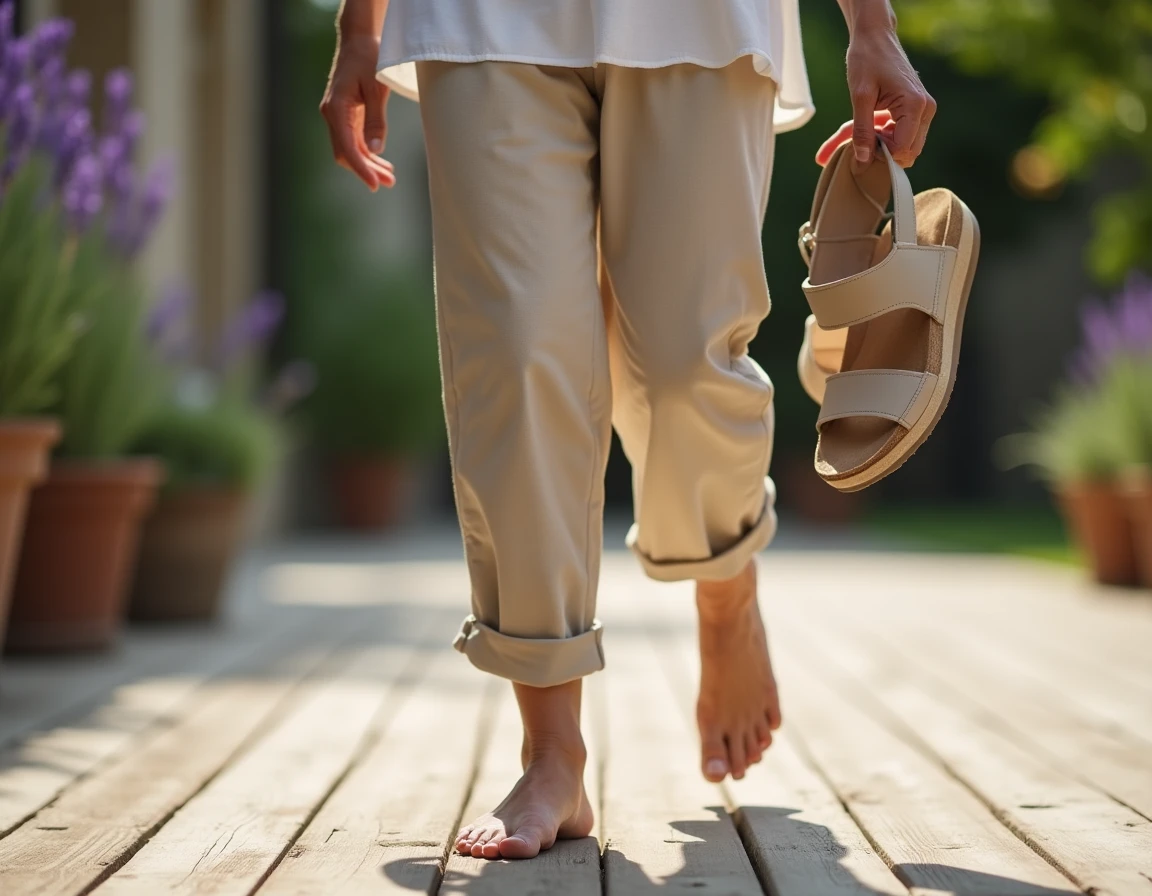
Birkenstock anatomical sole or Billowy foam: which arch support for which foot
The cork footbed of Birkenstock replicates a standardized anatomical shape, with support under the medial arch and a metatarsal bar. This relief suits the majority of feet, but it is not strictly physiological. Fabien Beuzon, podiatrist and member of the UFSP, specifies that the support under the plantar arch of Birkenstock is not physiological and can cause discomfort in some patients, particularly those with very high or very flat arches.
Billowy relies on softer materials and a less pronounced curve. The initial comfort is often perceived as superior, but the support collapses more quickly with use. For early fasciitis on a standard foot morphology, the Billowy compromise may work for short periods of wear. For chronic or recurrent fasciitis, the firm and durable support of Birkenstock remains more suitable.
Summary of selection criteria according to biomechanical profile
- Pronated foot with chronic fasciitis: rigid torsion sole, back strap, orthotic compatibility (advantage Birkenstock Milano or equivalent model with counter)
- Neutral foot with mild fasciitis and occasional wear: both brands may be suitable, provided the heel cup depth is checked
- High-arched foot sensitive to arch relief: must be tested in-store, as the Birkenstock relief may irritate the arch and worsen discomfort
- Overweight or acute inflammatory phase: neither Billowy nor Birkenstock replace an appropriate closed shoe
The choice between these two brands is not just a matter of price or style. It depends on the type of fasciitis, the biomechanical profile of the foot, and the duration of daily wear. A podiatric assessment remains the most reliable starting point before any purchase, because a poorly chosen sandal can perpetuate the pathology just as surely as a worn-out shoe.