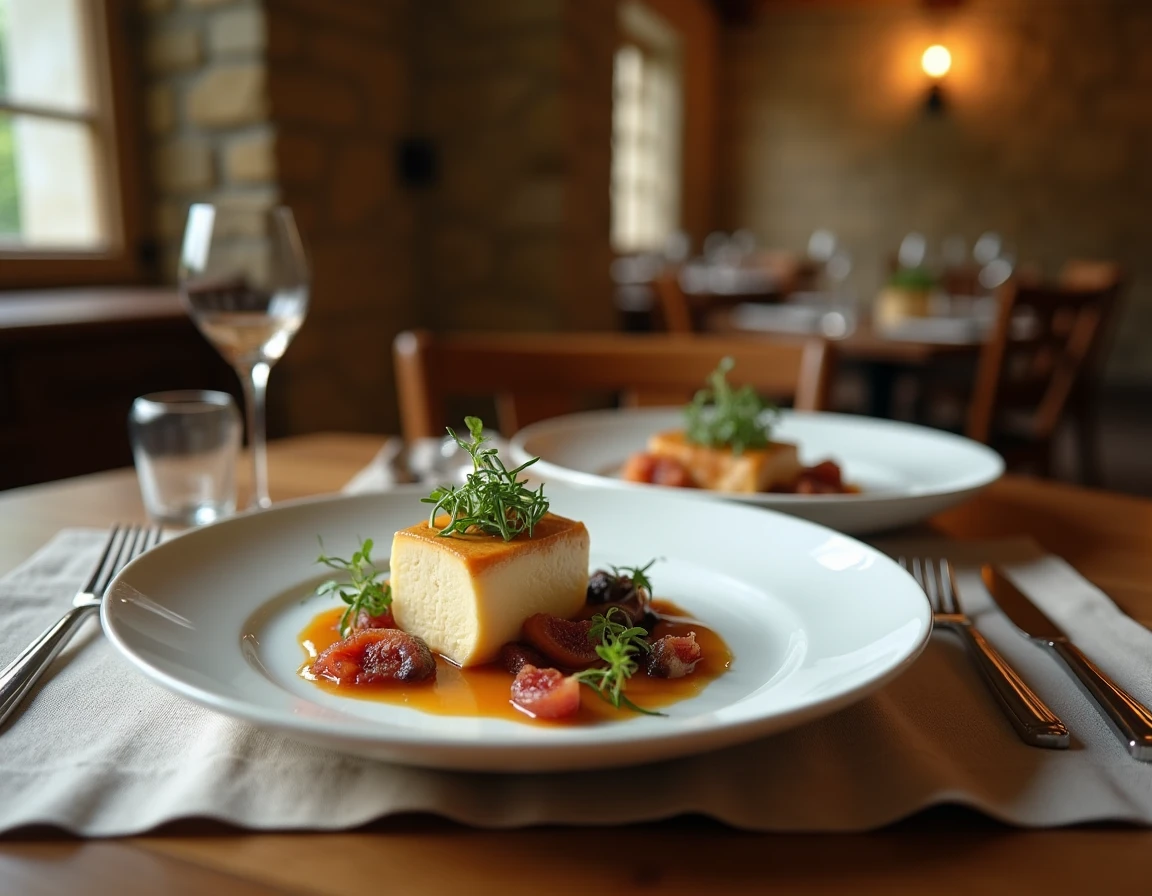
The Puisaye produces a culinary paradox that few Burgundy territories can claim: clay-siliceous soils poor in vines, but rich in meadows, undergrowth, and market gardens that supply a radically local gastronomy. Creating a gastronomic table here means working with a supply chain where the radius rarely exceeds thirty kilometers, and transforming this constraint into a signature.
Ultra-short circuits in Puisaye: the logistics behind the gastronomic plate
A gastronomic restaurant located in a rural area does not manage its suppliers like an urban Michelin-starred establishment. In Puisaye, the density of producers per square kilometer remains low. The chef must map out their resources by season and negotiate volumes suitable for a short menu, often renewed each week.
The direct consequence: the menu depends on the agricultural calendar, not on customer demand. A poultry farmer from Treigny delivers according to their slaughter cycles. A market gardener from Saint-Sauveur-en-Puisaye offers their heirloom vegetables when the soil allows. The restaurateur adapts their creativity to this flow, not the other way around.
This approach, which we observe in the committed tables of the territory, implies a nearly non-existent stock management: deliveries arrive in the morning, and the menu is finalized by late morning. The address https://www.gourmet-galopin.com/ illustrates this operation where the menu evolves with the rhythm of local arrivals.
The regulatory corollary is not insignificant. Hygiene standards impose strict traceability on each batch, including for small non-CE certified producers. The restaurateur then becomes the intermediary who secures the documentary chain, from the handwritten delivery note from the market gardener to the HACCP register of their kitchen.

Vegetarian gourmet table in Burgundy: a creative axis, not a concession
The integration of vegetarian dishes into a rural Burgundy gourmet table is no longer a defensive adaptation. Sector studies from the regional CCI published since 2022 confirm that traditional and gastronomic establishments in rural areas now include at least one vegetarian “signature” starter and main course on the menu, designed as an assumed creative axis.
The weekend Parisian clientele coming to Puisaye expects this offering. This audience, often aware of flexitarian diets, does not seek a substitute menu. They want a plant-based interpretation of the local terroir: a porcini mushroom from the undergrowth treated as a main course, a field beet roasted with hay, a root parsley juice prepared like a classic sauce.
We recommend to tables that are still hesitant not to confine vegetarian options to a single dish at the bottom of the menu. Gastronomic coherence requires thinking of plant-based dishes as a complete journey, from the amuse-bouche to dessert, with the same level of technique as for animal proteins.
What the poyaudin terroir brings to vegetables
The Puisaye has specific advantages for gourmet vegetarian cuisine:
- Abundant seasonal wild mushrooms (porcini, chanterelles, trumpets), which offer textures and umamis capable of structuring a dish without animal protein.
- Locally grown legumes (lentils, chickpeas) that integrate into fermented preparations or complex broths.
- A heritage of heirloom vegetables (squashes, parsnips, Jerusalem artichokes) being cultivated again by recently established market gardeners, providing varieties unavailable in wholesale markets.
Sustainable rural gastronomy: regulatory constraints and economic model in Puisaye
A gastronomic table in a rural setting cannot apply the same pricing model as an urban restaurant. Attendance fluctuates significantly between the high tourist season and the slow winter months. The average basket must absorb these variations without sacrificing the quality of supplies.
The ultra-short circuit allows for reducing intermediary costs (no wholesaler, no long-distance transport), but it generates other expenses: sourcing time, multiplying suppliers, administrative management of traceability. The gain on raw materials is partially offset by a higher need for skilled labor.

New clientele and adaptation of the offer
Remote work has changed the geography of clientele in Puisaye. Professionals temporarily settled in lodgings or second homes frequent local tables during the week, outside the classic tourist patterns. This clientele, often well-informed, values transparency about the origin of products and the environmental approach.
Responsible tourism generates a demand for overall coherence, from the choice of suppliers to waste management in the kitchen. Restaurateurs who communicate clearly about their local sourcing, anti-waste policy, and short menu observe stronger loyalty from these profiles.
The Puisaye also benefits from a favorable geographical positioning: far enough from Paris to offer a real change of scenery, yet accessible for a weekend. The gastronomic tables of the territory thus attract clientele who weigh options between Puisaye and more well-known destinations in Morvan or Chablis.
Burgundy cuisine in Puisaye: keeping the structure without freezing the repertoire
The Burgundy culinary repertoire is based on stocks, long braises, and thickened sauces. These techniques form a transposable foundation for both vegetables and less conventional local proteins (snails, crayfish, game from Puisaye). The risk for a rural gastronomic table would be to museumify this repertoire by reproducing it without reinterpretation.
Chefs who succeed in Puisaye apply the Burgundy grammar (reductions, long cooking, texture contrasts between crunchy and melting) to products that tradition had not integrated. A root vegetable broth reduced for several hours acquires the depth of a classic brown stock. A refined crottin de Chavignol, produced just a few kilometers away, replaces industrial cheese in a reworked gougère.
The gastronomic table in Puisaye functions as a laboratory where local terroir and Burgundy techniques meet without nostalgia. Authenticity does not lie in the faithful reproduction of a historical dish, but in respecting a direct relationship between the soil, the producer, and the plate. It is this proximity, maintained without logistical compromise, that distinguishes a poyaudine table from a gastronomic restaurant that would merely decorate its menu with the word “terroir”.