
The mythological world is full of fascinating beings whose very existence is woven with mystery and magic. Among these creatures, satyrs hold a special place, embodying the spirits of nature linked to fertility, wine, and music. These half-man, half-beast beings, often depicted with horns, goat legs, and an insatiable thirst for pleasure, have traversed the ages, leaving an indelible mark on culture and art. Their story, intimately connected to that of deities like Dionysus, reveals a facet of Greek mythology rich in lessons and symbolism.
The origins and nature of satyrs in mythology
In the Greek mythological world, satyrs occupy an ambiguous position, both feared and celebrated. These half-man half-goat creatures, privileged companions of Dionysus, the god of wine and ecstasy, embody the overflow of the senses and the liberation of instincts. Their animalistic aspect reflects their closeness to the wild nature and their participation in the mysteries of fertility and regeneration. Their tails and horse ears, often overlooked in favor of their horns and goat hooves, add an additional dimension to their hybridity, that of raw and untamed animality.
The myth of Apollo flaying Marsyas illustrates the tension between civilization, embodied by Apollo, and instinct, represented by the satyr Marsyas. This tension is reflected in the way satyrs are presented in literary and iconographic sources: beings of desire and pleasure, but also symbols of a savagery that is both admired and feared. Their presence in antiquity testifies to the fascination they exerted, but also to the fear they inspired.
The historian Jean-Pierre Vernant emphasized the importance of satyrs in the context of Greek mythology as representatives of a form of resistance to the norms of civic society. They embody a fundamental otherness, a possible other world where social order and its constraints fade in favor of spontaneity and pure joy.
The relationship between Dionysus and his satyrs is essential to understanding their role in Greek beliefs and rites. Dionysus, as the god of wine, symbolizes transformation and the ephemeral. The satyrs, as his followers, are the agents of this transformation, conveying through their exuberant behavior and excesses the power of the god and the promise of a life liberated from ordinary constraints.
The representation and influence of satyrs in culture and art
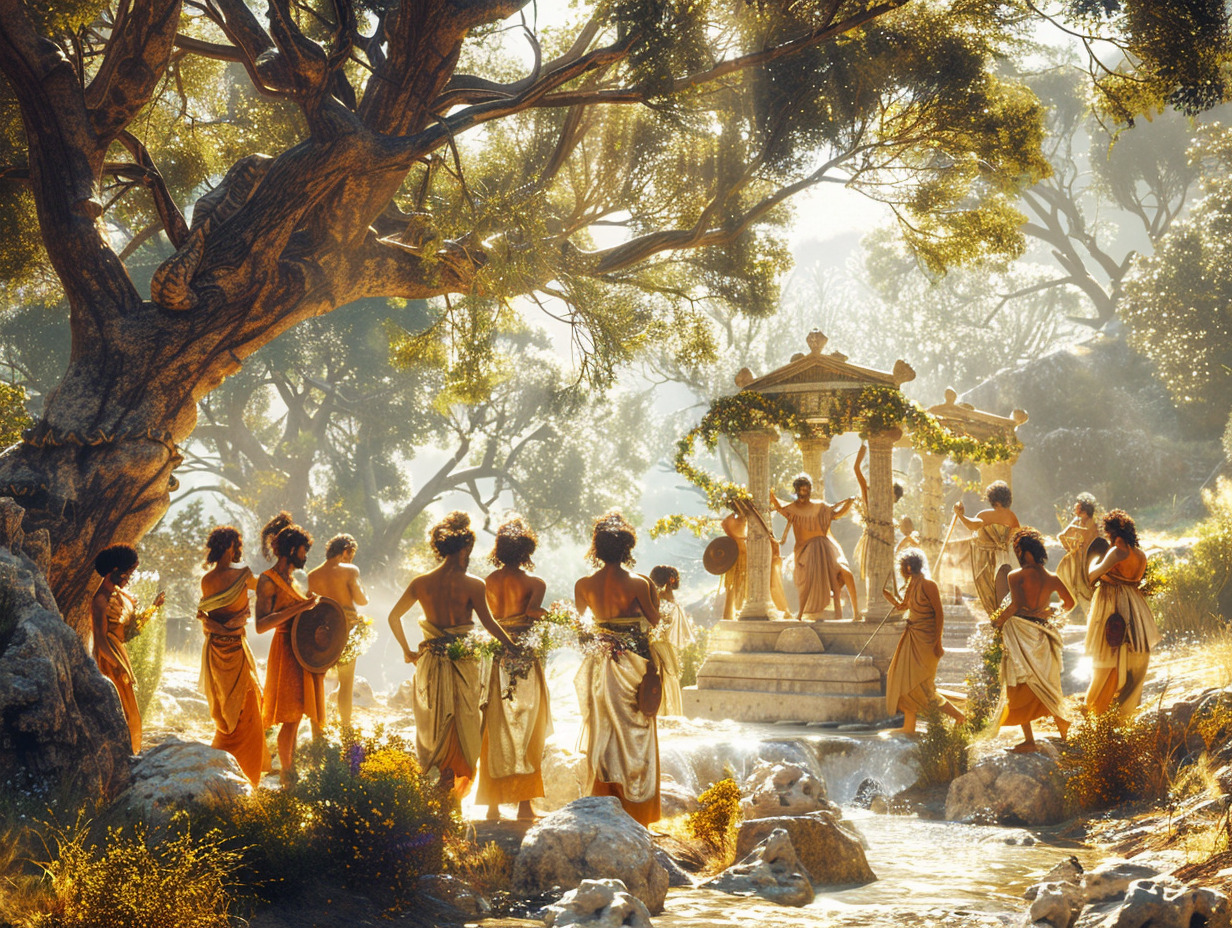
In the realm of Greek art, satyrs occupy a prominent place, symbolizing an aesthetic that embraces vitality and freedom. From the archaic period, these figures can be found in a multitude of media: Attic red-figure vases, sculptures, and frescoes. The beauty of these works lies in their ability to capture both the vigor and the delicacy of these mythological beings, often depicted in scenes of bacchanals or in the company of nymphs.
The diver in art history will note that the influence of satyrs is not limited to antiquity. During the Renaissance and the Baroque period, their figure experiences a remarkable resurgence. Cities such as Paris, Rome, and Naples become the stage for an artistic revival where satyrs are reinterpreted, incorporating new symbolic and aesthetic elements. These creatures are then often used to explore themes of human nature and passions.
In the United States, in cities like Boston as well as in Athens and Munich, satyrs continue to populate art collections, testifying to their transhistorical and transcultural reception. In painting, for example, satyrs are frequently attributed to the painter Brygos, whose works illustrate the complexity of these characters, both playful and lascivious.
In the 21st century, the influence of satyrs also manifests in popular culture, as evidenced by the series of books and films ‘Percy Jackson’, where these characters gain new life and continue to fascinate. Their representation in these modern works often serves to evoke themes such as the quest for identity and the acceptance of the other, proving that satyrs remain relevant figures in the collective imagination.